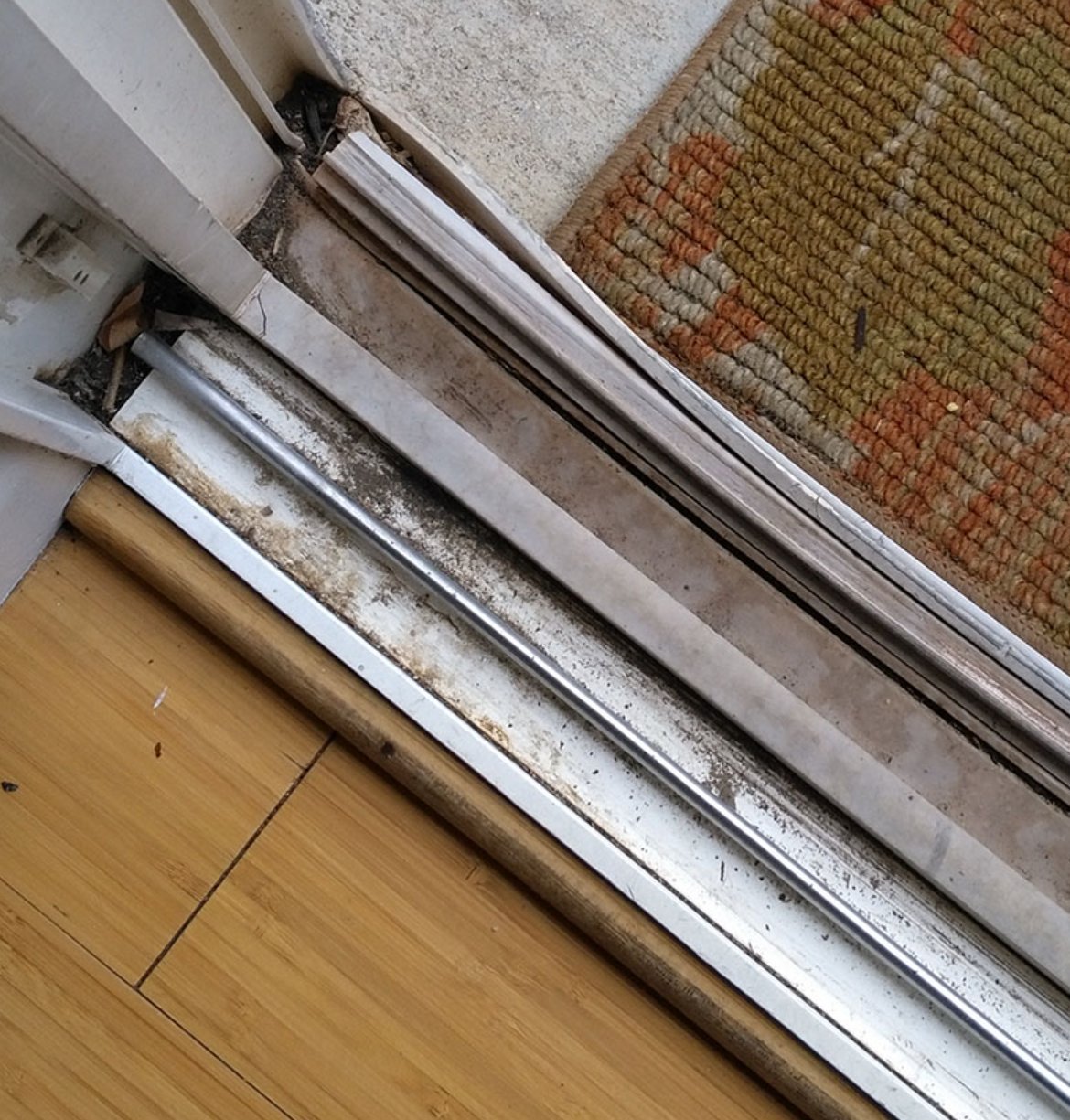
Weatherstripping is the part of a sliding door most people forget about — until it fails. Cracked or compressed weatherstripping is one of the most common reasons for drafts, energy loss, water leaking onto the floor during heavy rain, and ants or roaches finding their way inside.
The good news: it's an affordable, fast repair. Most jobs are $89-$199 and take 30 to 60 minutes. The improvement to your home's comfort, energy bill, and bug-resistance is significant.
Where the weatherstripping is and what fails
A sliding door has weatherstripping in five places:
- The interlock — where two panels meet in the middle when closed. Usually a fin-seal pile.
- The jambs — vertical sides where the door meets the frame. Fin-seal or bulb seal.
- The head — top of the door against the frame. Pile or bulb seal.
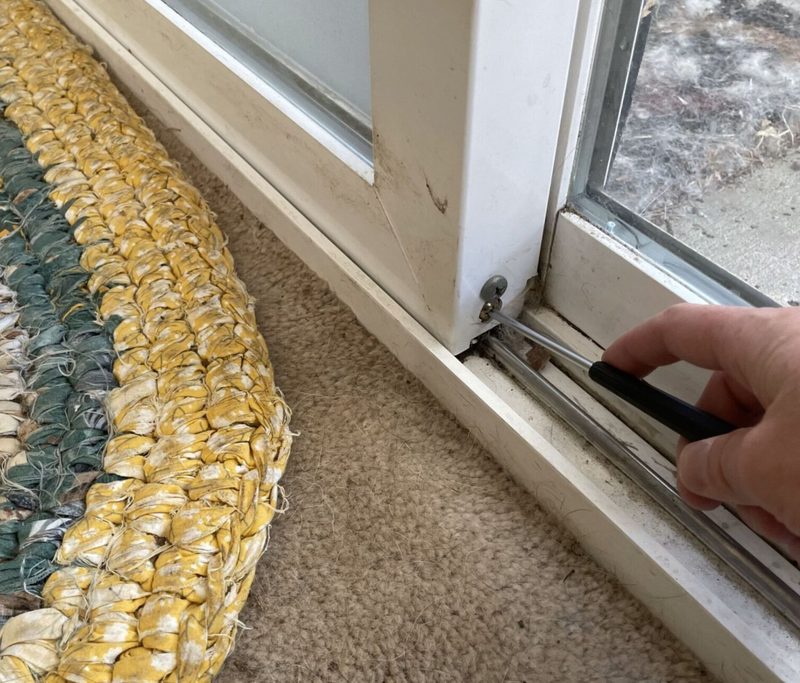
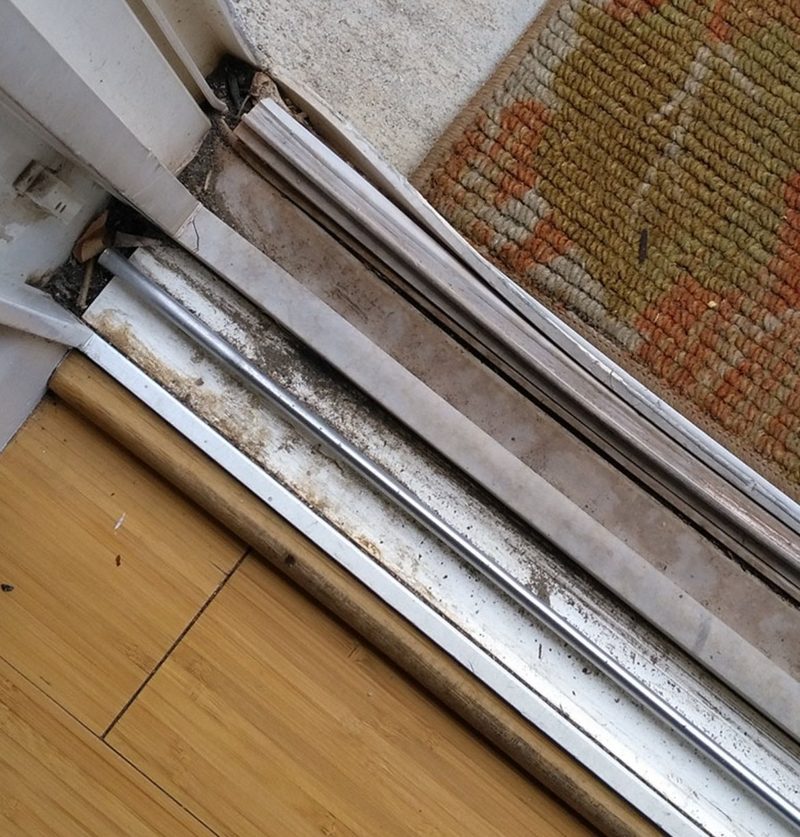
- The sill / threshold — bottom of the door against the floor. Bulb seal or sweep.
- Glass-to-panel gaskets — rubber gaskets that hold the glass in the frame, also weather-resistant. These last longest but eventually fail.
Materials we use
We carry brand-specific weatherstripping for Andersen, PGT, CGI, Pella, Milgard, and JELD-WEN, plus universal pile and bulb seal that fits about 80% of doors. Better materials mean longer life — we use OEM or premium aftermarket only.
For coastal homes (within 1-2 miles of the ocean), we recommend silicone or EPDM bulb seals rather than standard PVC, since saltwater air degrades PVC quickly. The upgrade is minor (~$20 extra) and roughly doubles the seal's service life.
When weatherstripping needs replacing
- Visible cracks, splits, or chunks missing from the seal material
- Daylight visible at the edges of the closed door
- Air movement felt at the door when closed
- Water on the floor inside the door after heavy rain
- Ants or small bugs appearing near the door regularly
- Dust or pollen accumulating inside the threshold
- Pile seal is matted flat and no longer springy
💡 Quick Tip from Our Techs
If you've replaced your weatherstripping and the door still leaks, the issue is probably the threshold drainage holes — they get clogged with sand and force water inside. Clear them with a flexible wire (or call us) and the leak usually stops.