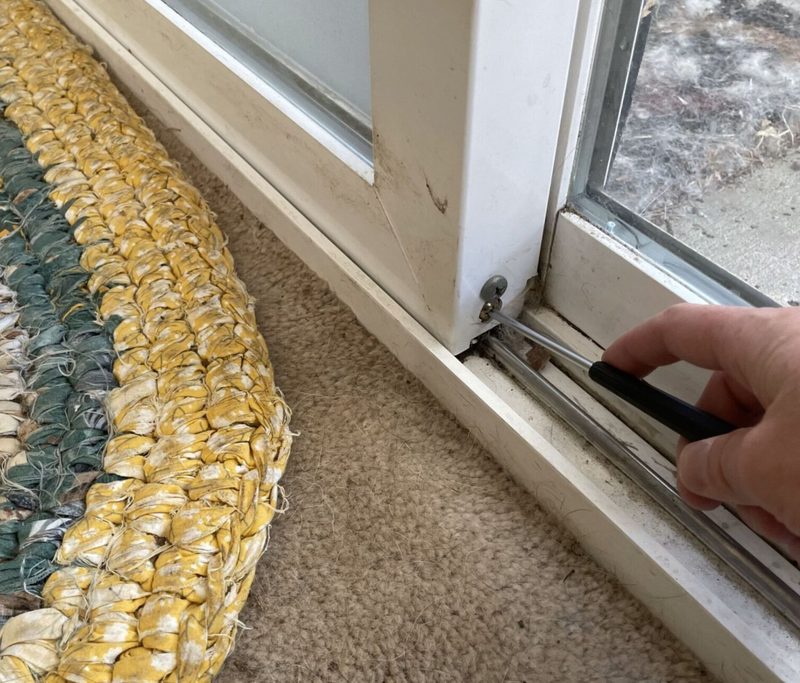
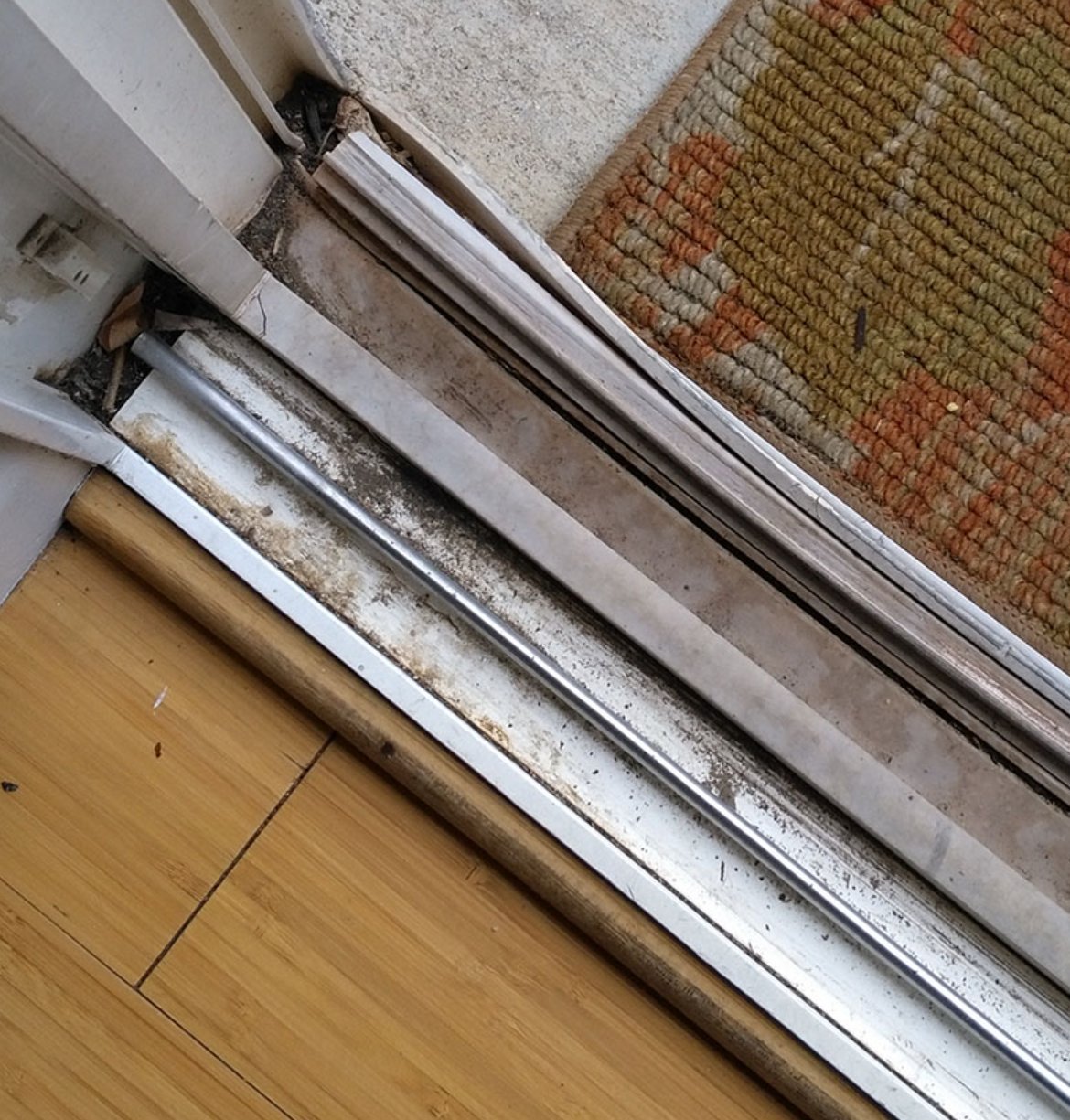
Sliding door tracks take a brutal amount of abuse. Every time you open the door, a 150-to-300-pound panel rolls across the same quarter-inch strip of aluminum. Add 12 months of sun, salt, sand, and the occasional patio chair dragged across it, and tracks wear out, dent, and corrode.
We handle three types of track work: light repair (straightening minor dents, cleaning out compacted grime, replacing track caps), full track replacement (when the wear-track or rail is dented through), and track capping (when the original track can't be removed but a stainless overlay can save the day).
Symptoms that point to track damage
Track problems and roller problems can look identical from the outside — the door is hard to slide. But the fix is completely different. Some quick tells that it's the track, not the rollers:
- The door drags only at certain points along the track (not the whole length)
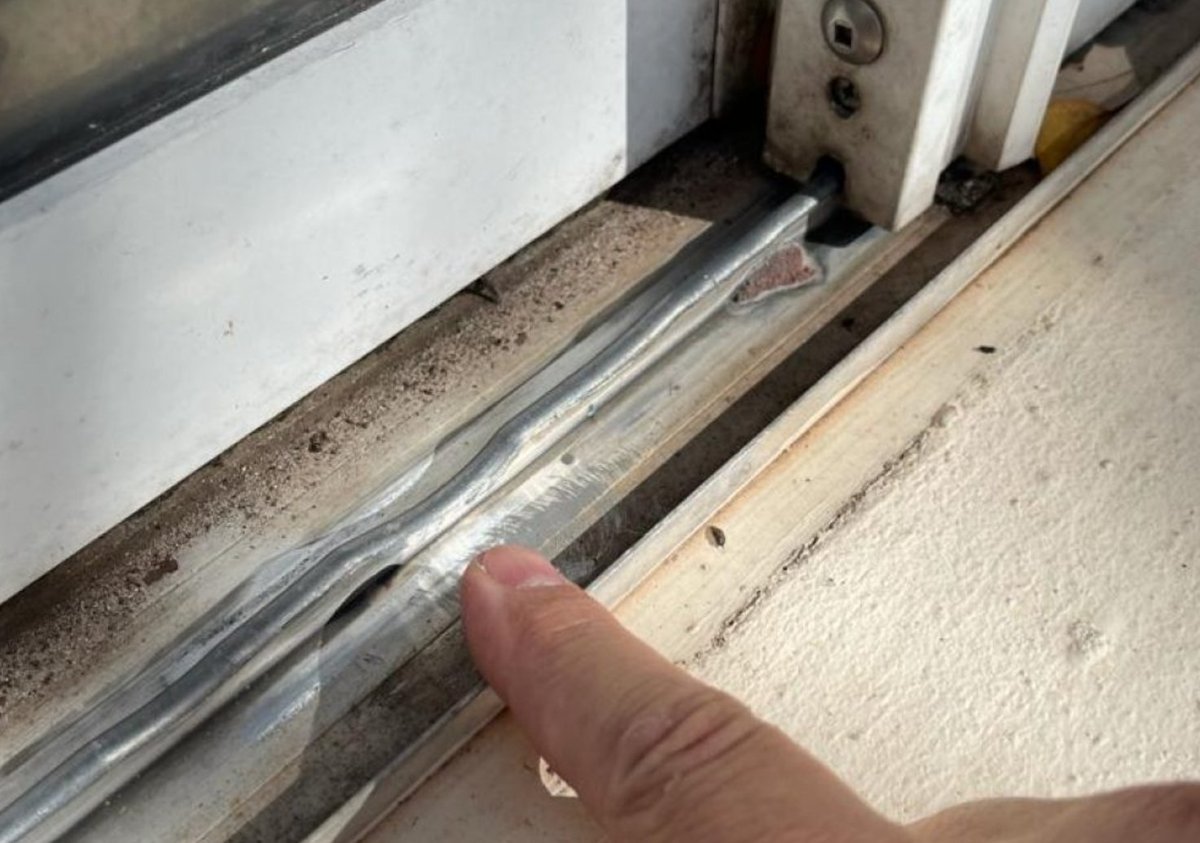
- You can see visible dents, gouges, or worn-through aluminum on the bottom track
- The door slides smoothly until it hits one rough spot, then jumps
- Track has visible corrosion, white powder, or rust
- Track has bent upward (often from dragged furniture) and binds the door
When we repair vs replace the track
Track replacement is more involved and more expensive than repair, so we exhaust the repair options first. Most tracks can be saved by: deep cleaning out the channel, replacing the worn-out wear-strip insert (most brands have a replaceable cap on the rail), gently bending dented sections back to true, and applying a slick lubricant.
Full track replacement is reserved for tracks that are: worn through (you can see daylight under the rail), so corroded the cap won't seat, or bent badly enough that the door binds along its full length. In a slab-on-grade Florida home, full replacement is a 2-to-4-hour job and may involve cutting and patching the threshold.
Stainless steel track capping
For homes where the original aluminum track is integrated into the frame and can't easily be removed, we offer stainless-steel track caps. These are precision-cut overlays that snap into the existing track, give the rollers a fresh, hardened wear surface, and add corrosion resistance. We use this most often on Andersen Perma-Shield and older PGT doors where the track is bonded to the frame.
💡 Quick Tip from Our Techs
Never use WD-40 on a sliding door track. It works for about a week, then the petroleum solvents attract sand and dirt and create a grinding paste that destroys both the track and the rollers. Use silicone or PTFE-based sliding-door lubricant instead.